
Have a deeper conversation- choosing your words precisely「用詞精確」(for heritager learners and intermediate learners)
Originally written as a newsletter on October 22, 2026, this post is a reflection
on my teaching.
今年我開始在班上嘗試不一樣的事,
This year, I started trying something different in my classes:
鼓勵學生「用詞精確」。
encouraging students to choose their words precisely.
特別針對華裔的學生、或是中級程度學生要開始「用詞精確」。
This is especially important for heritage learners and intermediate-level students
who are ready to start being more precise with their word choices.
在課堂上,有時候我覺得我已經沒什麼好教學生的了。
Sometimes in class, I feel like there’s not much left for me to teach my students.
例如我們聊日常生活話題、討論有趣的議題、看影片時,
For example, when we talk about everyday topics, discuss interesting issues, or watch videos,
學生基本上都看得懂,口語表達也都不錯。
my students can generally understand everything, and their speaking skills are pretty good, too.
可是有趣的是,在某些時刻我又覺得有好多好多可以教。
But interestingly, there are other moments when I realize there’s still SO much I can teach them.
當我把那些重要詞彙抓出來,一個個列出來問班上學生時,
其實大家不太知道。
When I pull out important vocabulary, list the words one by one, and ask my students about them,
I realize that most of them don’t actually know the words very well.
我發現一個問題,
I’ve noticed a common problem:
學生「了解大概的意思,但是沒辦法精確的表達自己,
學生的用詞通常太模糊 」。
students understand the general meaning, but they can’t express themselves precisely, students’ word choices are often too vague.
例如,我給學生看一個影片,我發現臺裔學生、
或是程度不錯的學生可以聰明的用上下文去猜到講者在講什麼,所以就讓它過去。
For example, when I show my students a video,
I notice that heritage learners of Taiwanese Americans,
and other students with a strong command of Chinese can cleverly use context to figure out what the speaker is saying, so they just move on.
例如以下是我最近在課堂上要求學生要記得的字
To give you an example, here are the words and phrases I recently ask my students to remember in class.
⬇️
1 把曬乾的衣服拿進來 Bring in the laundry after it has dried; (this one is simple but students can’t actually say it precisely)
2 亞洲父母 Asian parents (now it's become an adjective implying controlling parents or parents who expect a lot from their children.)
3 飲食控制 Dietary restrictions / watching what you eat;
4 臺北市長選舉 Taipei mayor Election;
5 諧音梗 A pun based on similar sounds / a homophone pun;
6 臺積電(太重要) TSMC — this one is SO important;
7 少子化 Declining birth rates;
8 反應很快(臺灣人職場稱讚常用)
Quick-witted (a common compliment at workplace in Taiwan)
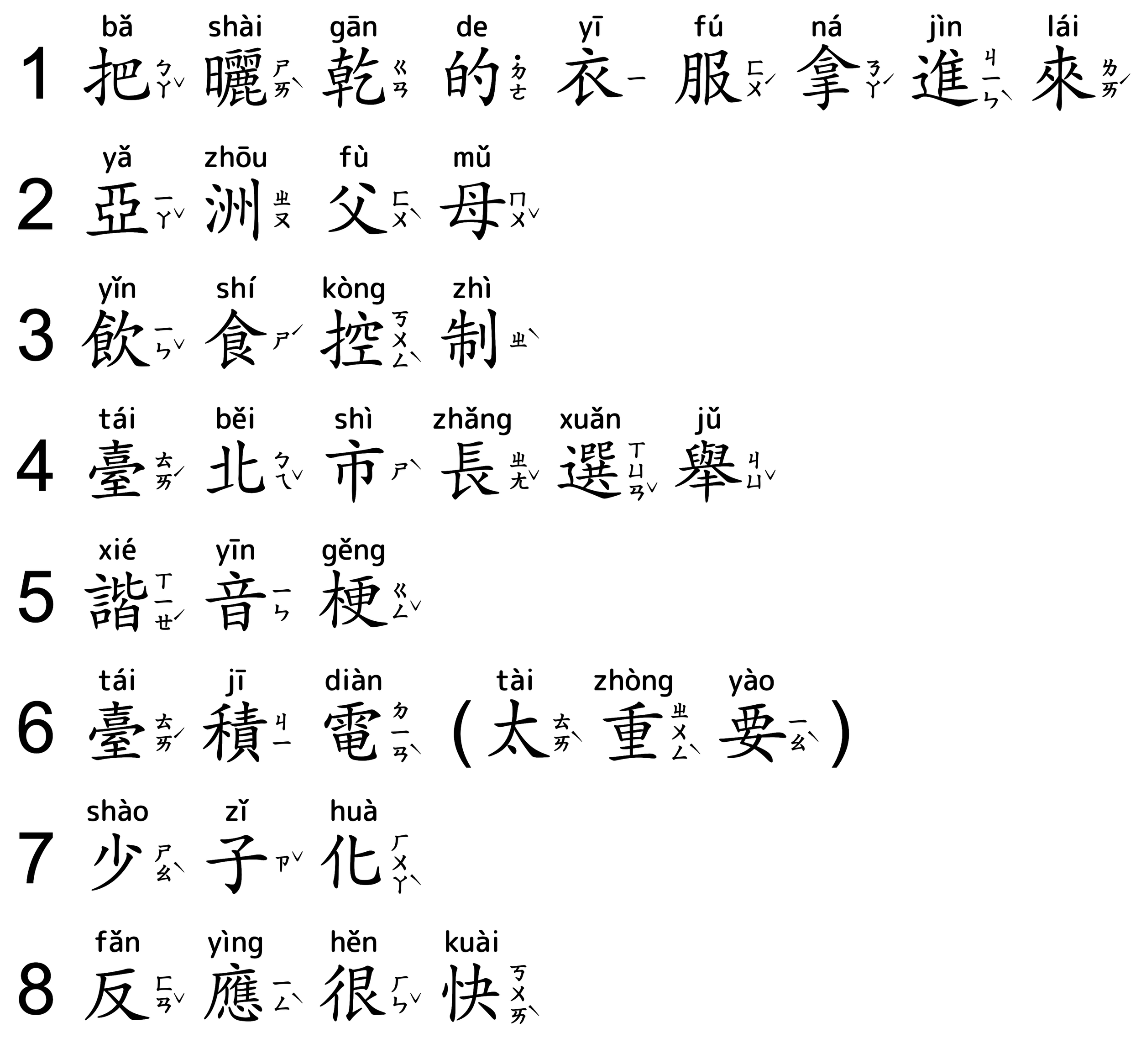
⬆️
這些都是跟臺灣人聊比較深話題會用到的詞
These are all words and phrases you’ll need when having deeper conversations with Taiwanese people.
有沒有發現有些字也跟臺灣文化息息相關?
Have you noticed that some of these words are closely tied to Taiwanese culture, too?
如果你會,很容易就可以跟臺灣人有共鳴、連結
If you know these expressions, it’ll be much easier to connect with Taiwanese people and relate to them on a deeper level.
我發現學生的共同問題是用一長串的話,表達一個概念。
I’ve noticed that a common problem among my students is that they use a long string of words to express a single idea.
包括我在內,我發現我自己學語言也有這種傾向。
And I’m no exception! I’ve noticed that I have the same tendency when I’m learning a language myself.
📒
現在的你在哪個階段呢? Which stage are you at right now?
如果你是初級學生,我鼓勵學生不要太認真,不要追求精確,
If you’re a beginner, I encourage you not to take things too seriously or worry about being precise.
重要的是不要怕講、犯錯
The most important thing is not to be afraid to speak and making mistakes.
但是現在如果你是程度不錯了(先恭喜你!你很棒),我鼓勵學生要開始認真,
追求「精確」、去記住臺灣人習慣用字、了解現代臺灣文化。
But if you’ve already reached a pretty good level of Chinese (first of all, congratulations! You’re doing great!),
I encourage you to start taking things more seriously. Start striving for precision, learning the words and expressions
Taiwanese people naturally use, and understanding contemporary Taiwanese culture.
This is an important step to have a deeper meaning conversation.
如果你是 heritage learners,可能基本日常對話溝通、聊吃的東西都沒問題
If you’re a heritage learner, you might have no problem with basic everyday conversations or chatting about food.
但是要更上一層樓,真的需要有意識的練習逼自己。
But if you want to take your Chinese to the next level, you really need to practice intentionally and push yourself.
加油,你可以的!
Keep going! You can do it!
觀察身邊的臺灣朋友、同事,多多問他們。
Pay attention to the Taiwanese friends and colleagues around you, and don’t be afraid to ask them questions.
(我也懂對有些人來說可能覺得點煩 i'm aware it can be annoying for some people:))
「你剛剛說的字是什麼,可以再說一次嗎?」
“What was that word you just used? Could you say it again?”
「可以幫我寫下來嗎?」
“Could you write it down for me?”
當然也歡迎你來上我的課,最近 premier coaching 已經確定開班。
Of course, you’re also welcome to join my classes.
My Premier Coaching class is officially happening.
報名可以看這裡,還有兩位名額。
You can register here.
Two more spot left.
加油,我們可以更上一層樓❤️
Keep going! We can all take our Mandarin to the next level. ❤️
我必須馬上結束寫這個電子報,
I need to wrap up this newsletter now.
竟然花了快一個小時寫。
I can’t believe I’ve spent almost an hour writing it!
謝謝你們看到這邊。
Thank you for reading all the way to the end.
謝謝我的學生給我如此多的靈感。
And thank you to my students for giving me so much inspiration.
謝謝
Thank you! ❤️
